
ON SALE SOON
Thursday, Oct 22 2026, 10:00 AM PDT
Timbre Concerts Presents
Fenne Lily, Trinity Ace
Sun, 28 March 2027, 8:00 PM PDT
Doors open
7:00 PM PDT
The WISE Hall
1882 Adanac Street, Vancouver, BC V5L 2E5
ON SALE SOON
Thursday, Oct 22 2026, 10:00 AM PDT
Description
Timbre Concerts presents Fenne Lily - Win Win North American Tour With Guest Trinity Ace.
Artist Presale: Wed Oct 22 @ 10am
Public Onsale: Fri Oct 23 @ 10am
For more info on Timbre Concerts and their upcoming concerts visit www.timbreconcerts.com.
Event Information
Age Limit
19+
Refund Policy
All Sales Final. No exchanges or refunds unless the event is cancelled or postponed.
Alternative Folk
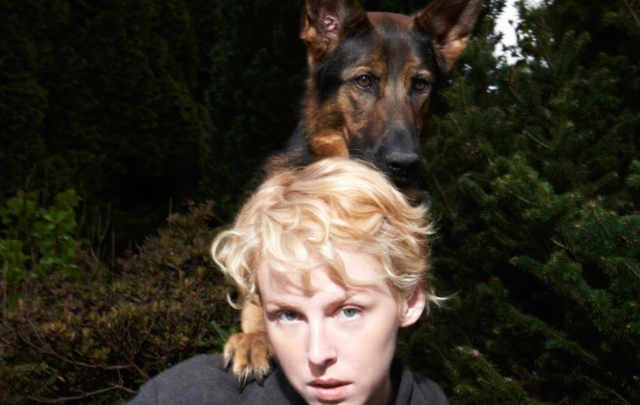
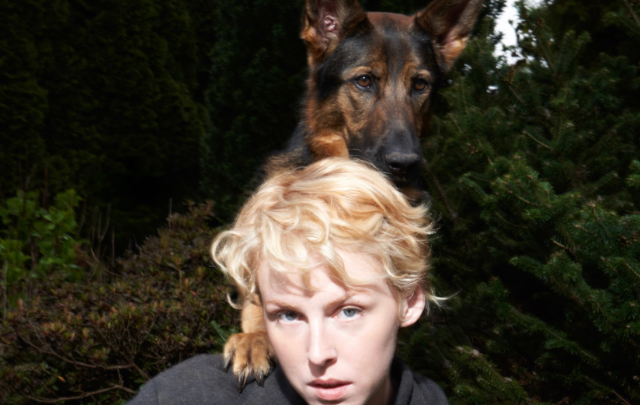
Fenne Lily
Fenne Lily
Alternative Folk
The record started like this: a move to New York from England. An out of the blue phone break-up, on Independence Day. A month of running, not eating enough, drinking too much. A month of writing thousands of words a day, frantically, from a place of guilt. A month where it felt like this loss of self. It started out like an exorcism. But it doesn’t end that way.
Because things started to shift for Fenne Lily. The blame she placed on herself dissipated. New York, her new city, started to feel like her home. A place she had some ownership; a place that now held her own memories and experiences. She drove to New England in a truck. She made music with her friends in the Hudson Valley. She spent nights running pool tables. She fell in love again. She began writing the songs to her fourth album, Win Win. And she found that as she did this, the songs she wrote were coming from a place of warmth, self discovery. Something new was emerging from inside of herself. “I wanted to make music that sounded like the sun was out,” says Fenne. Win Win is a record that sounds like the sun is out.
“What do you feel like you’ve won?” asked Fenne’s father of the record’s title. She explained to him that what she won is what she did not lose. Of course, she had experienced loss: the loss of a relationship, the loss of a beloved pet dog. But she did not lose her integrity. She did not lie. Win Win is an exploration of this idea; this need for grit and conviction as a means to make art and to feel whole. The resulting album is some of Fenne’s best, most beautiful writing to date. It is a record that is honest, feels hopeful, sounds free.
In retrospect, says Fenne, “Sleeping” feels like a blueprint for Win Win. A proof of concept. “I say what I mean and am a little bit mean in the process,” she says, “It’s a thoughtful rage.” The song was written in the immediate aftermath of Fenne’s breakup. She was living in an old brownstone in Bed-Stuy, and wrote the song as a container for her anger, a container to say everything she thought she couldn’t say. “‘You kept me around long enough to learn my patterns,” she sings, her voice clear, “Blamed me for returning to them, then said it’s not about me.” There’s a really gorgeous interplay between keys, guitars, and trumpet (which, crucially, is not an actual trumpet, it is a trumpet noise, from the mouth of bandmate and friend Isaac Stalling). The song is strong, searching, and triumphant.
When Fenne can’t figure out the lyrics for a song, she’ll use poetry as a placeholder. She’ll figure out a song on the guitar, then set it to a poem she likes. On Win Win, some of those poets include Richard Siken, Diane Suess, and Franz Wright. While their words are no longer in Fenne’s lyrics, the record still maintains this poetic quality. “Uh Huh,” the album’s opener, is one such offering. The song is written from a roving perspective, where the “you” in question is Fenne. It’s a vantage point that creates a conversational quality in the song, where Fenne explains both her break up and her budding new relationship. The images here are clear and crisp. “Couldn’t breathe and couldn’t sleep and could’ve sworn you lost it all,” she sings, “but it all turned out to be just one year-long long-distance call.”
Win Win was made over the course of a year and a half. In snowstorms, heat waves, when Fenne was in the middle of moving apartments. There were pauses in recording due to a Samba band playing outside, down the block from the studio, or an enormous blizzard that marooned a bass player in Flatbush. She recorded with her old bandmates from England, and new friends she’d made in New York. She recorded the record live, and some of it to tape. It was a challenging recording process. She’d have a little distance from a session, and found that the meaning of her songs were changing as time passed (so much so that she recorded the single “Stranger Things” four different times). “Uh Huh,” too, changed quite a bit from writing to recording. “I knew it had to have a solid groove to it, sound strong and sure of itself, and it took a couple of different band configurations to get there.” says Fenne. The secret ingredient was, as it turns out, drums from longtime friend and collaborator James Luxton.
Win Win was recorded in fits and starts, but the final product is a record that is so grounded, so cohesive, so incredibly lovely from start to finish. Even (and especially) “in Life and on Planes,” the last song on the record. It is a song that was added at the very last minute, after the album had already been mixed, swapped for a different song as a final hail mary. It is a truly glorious song, raw and imperfect, hissing with tape. “I don’t belong to other people now,” Fenne sings in the song’s last moments, over and over, like a mantra. It is a moment that feels so alive, on a record that feels so alive. Win Win is alive. It is a record of self discovery. Sad but happy. Happy but sad. Written in the light.
Folk
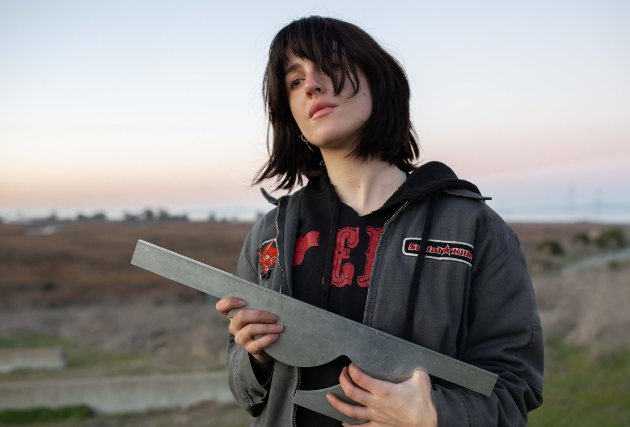
Trinity Ace
Trinity Ace
Folk
Just after turning 18, Trinity Gardner took a month-long road trip with her estranged father to meet her paternal side of the family for the first time. They drove across the American West, cutting through red canyons from Texas to Colorado, meeting family she never knew existed. Learning to Be a Cowboy on the Horse that Broke My Arm, her debut EP and first photography book, sprung from the need to process the experience.
Back in San Francisco, Gardner formed a band, fronting as singer and lyricist for a six-piece orchestral ensemble. Together they bend experimental rock, Americana, and folk into a six-track reckoning with forgiveness, building new relationships on muddy ground, and the spirituality that comes as a gift of grief.
Gardner’s training as a fine artist alongside her intellectual training at Stanford equipped her to critically examine the frontier mythos she encountered on the road. Frontier mythology, Gardner suggests, manipulates Americans into a kind of slow death. It cunningly recasts back-breaking labor and the masculine imperative of self-sufficiency as honor and independence. She is not unsympathetic to its pull, as she witnessed first hand how its promise can offer identity and purpose. But it is ultimately a top-down affective tool, deployed to coerce labor and obscure power in times of contingency and crisis.
No image captures this more perfectly than the one embedded in the EP’s title. Gardner’s grandfather was bucked from his horse at the age of seven. Without money for medical expenses, he wrapped his arm himself and let it heal frozen in the shape of a 90° crowbar—a deformity he would carry for the rest of his life. Despite this, he rode that same horse every day until it died and worked every day on the ranch until he did, at age 96, where the epitaph read: “The Last of the Real Cowboys.”
The EP is the aftermath of, in her words, “choosing to embrace something that hurt you. Choosing to forgive.” This confessional quality is something she gravitates toward in other musicians: Whether it’s Jeff Mangum, David Berman, or Leonard Cohen, she cites a kinship with frontmen who are uninhibited, raw, and honest. Gardner renders this openness in visceral terms: in the piercing of her spine in “Pierce”, driving nails into her hands in “Talisman” or hands dragging across blood-wet concrete in “Battle Cry.”
Gardner is immersed in the indie music scene spilling out of San Francisco’s Richmond District. Along with Trinity Ace, Double Helix Peace Treaty and Poor Image prove that the city’s fog is far from sedating — it seems to insulate them from outside conventions, creating conditions in which new sounds can run free. Reflecting on countercultural 1960s, a time that is popularly lamented due to the changing economic conditions of San Francisco, Gardner believes that magic still brims from the city. “I feel it most when I’m walking in the park. I think it’s, quite literally, a natural magic…it still proliferates. People are charged by it.”