TICKET SALES TERMINATED
Tickets are currently unavailable on TicketWeb
www.timbreconcerts.com
Black PumasNeal Francis
Wed, 16 October
Doors open
7:00 PM PDT
Rickshaw Theatre
254 East Hastings Street, Vancouver, BC V6A 1P2
TICKET SALES TERMINATED
Tickets are currently unavailable on TicketWeb
Description
Timbre Concerts presents Black Pumas With Guest Neal Francis.
For more info on Timbre Concerts and their upcoming concerts visit www.timbreconcerts.com.
Event Information
Age Limit
19+
Refund Policy
All Sales Final. No exchanges or refunds unless the event is cancelled or postponed.
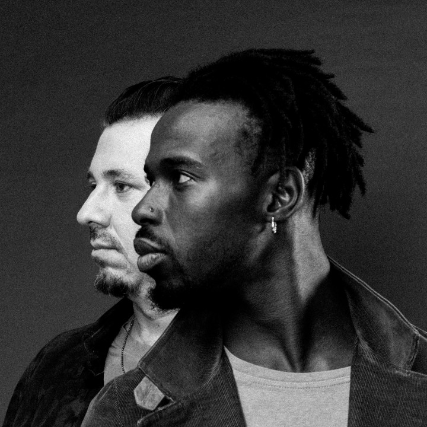
Soul
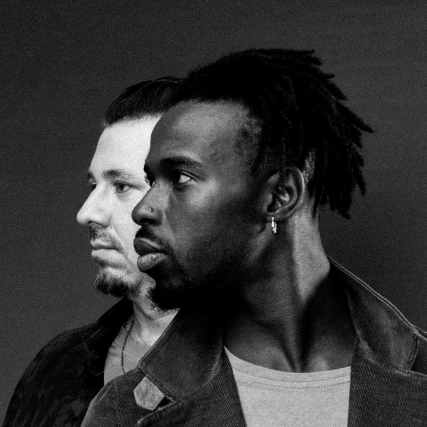
Black Pumas
Black Pumas
Soul
Sometimes, a mystical, life-changing connection can be closer than you think.
In 2017, Grammy Award-winning guitarist/producer Adrian Quesada had recorded some instrumentals in his Austin studio, and he started looking around for a vocalist -- he knew a lot of singers, but he wanted something different. He reached out to friends in Los Angeles, in London, but nothing seemed right.
Meantime, Eric Burton had recently made his way to Texas. Born in the San Fernando Valley, he grew up in church and then got heavily involved in musical theater. He started busking at the Santa Monica pier, where he brought in a few hundred dollars a day and developed his performance skills. Burton traveled through the Western states before deciding to settle down in Austin -- setting up his busking spot on a downtown street corner, at 6th Street and Congress, for maximum exposure.
A mutual friend mentioned Burton to Quesada, saying that he was the best singer he had ever heard. The two musicians connected, but Burton took a while to respond (“My friends were like ‘Dude, you’re a mad man, you need to hit that guy back!’“) Finally, he called Quesada, and started singing to one of the tracks over the phone. “I loved his energy, his vibe, and I knew it would be incredible on record,” he says. “From the moment I heard him on the phone, I was all about it.”
The results of that inauspicious beginning can now be heard on the self-titled debut album from Black Pumas, the group that Quesada and Burton assembled, which has become one of the year’s most anticipated projects. Described as “Wu-Tang Clan meets James Brown” by KCRW, Black Pumas were the winner of Best New Band at the 2019 Austin Music Awards.
Quesada has a storied reputation from playing in bands like Grupo Fantasma and Brownout, accompanying artists from Prince to Daniel Johnston, and producing such acclaimed projects as 2018’s Look at My Soul: The Latin Shade Of Texas Soul. For the tracks that kicked off this project, though, he had a different direction in mind. “I was looking for somebody with their own identity,” says Quesada, “who liked Neil Young as much as Sam Cooke.”
Burton’s taste, range, and experience proved to be exactly what Quesada was seeking. “We just take to the same kind of music,” he says. “I listen to East Coast hip-hop, old soul music, folk music. When Adrian sent me the songs, it was like I had already heard them before. We were on the same wavelength from the get-go.”
The first day they got together in the studio, they recorded the dusty funk that would become the Black Pumas’ first two singles, “Black Moon Rising” and “Fire.” Quesada had written the music for “Black Moon Rising” on the day of the 2017 solar eclipse, and Burton took that concept and ran with it. “Right away, the hair stood up on the back of my neck,” says Quesada. “I knew, ‘This is it -- this is the guy.’”
Burton sensed the potential, as well. “When I saw that Adrian played with Prince and had a Grammy,” he says, “that he was a serious, respected artist, I knew that I would do my best not to squander that. If you can do it on the street, for a long time, without making yourself crazy, you can do it with a guy who’s won a Grammy.”
The duo also knew that they didn’t want their sound to be too retro or imitative. “We didn’t want to just do throwback soul and pretend that hip-hop never happened,” says Quesada, noting that it was listening to Ghostface Killah that initially triggered him to start writing this material. “It had to feel sincere coming from us. I have a certain aesthetic in the studio, Eric has a voice that evokes a certain era, but I don’t think we reference that too directly.”
“Adrian has had the time and the interest to really dive into a specific sound, to recreate something he heard on a Motown record,” adds Burton. “And because of that specific knowledge, he provides an interesting sandbox for me, whose background is in theater, to do something super-unorthodox -- to be an art student and play with all the colors I have, but to put it on something that’s more familiar to listeners’ ears.”
With Black Pumas having evolved from an idea to a session to an album, they decided to put a band together and see how this music sounded live. They booked a residency at C Boys (a sister venue to Austin’s famed Continental Club), initially playing every Thursday for a month. “We only rehearsed twice, we had no idea what we were getting ourselves into,” says Quesada. “But with the first show, we knew it was unique, special -- the chemistry and fire were there immediately. And what Eric could do as a frontman was like nothing I’d ever seen.”
As word got out, the C Boys shows turned into a local phenomenon (“the hottest party in town,” according to the Austin American-Statesman), with lines around the block despite the fact that the band had only released one song. The reaction to the group’s recent South by Southwest appearance helps explain the mania -- the Chicago Tribune called Burton’s performance “a whirlwind of movement and gesture,” while Rolling Stone, in naming Black Pumas “One Of The 30 Best Bands We Saw In Austin,” wrote that “the hometown six-piece’s grooves were funky in a thick, viscous way, oozing out in ambitious jams that wandered into heady territory without meandering” and praising Burton’s “tireless, charismatic energy.”
The other, unexpected result of the C Boys residency was that Burton presented more of his own songs to help fill out the set, which led Black Pumas into new territory. “Eric had all these other songs based on other styles, going back into what he was doing when he was busking,” says Quesada. “It was a real spark that we could huddle around him and his songs, too, and get a real sense of what our sound was.”
In fact, the final song recorded for Black Pumas was “October 33,” a tense, pleading ballad by Burton. “I didn’t feel like we had the right last song,” says Quesada, “we needed something with more of Eric on guitar. I said ‘I want to put down one more, do you have anything?’ and he texted me back exactly what I was imagining -- it was almost unspoken.”
Quesada and Burton both return, over and over, to this almost mystical connection they felt from the beginning. It’s this sense of common purpose, of shared vision, that gives Black Pumas its focus and power -- and that points to great things ahead.
“It’s so seamless, it’s like we’re musical brothers to some degree,” says Burton. “It feels so easy to meld together that what’s most important for us now is to continue to look for new sounds -- to make sure we’re feeding ourselves the knowledge to continue to evolve. Every time we get together, it’s better than the last time.”
Rock
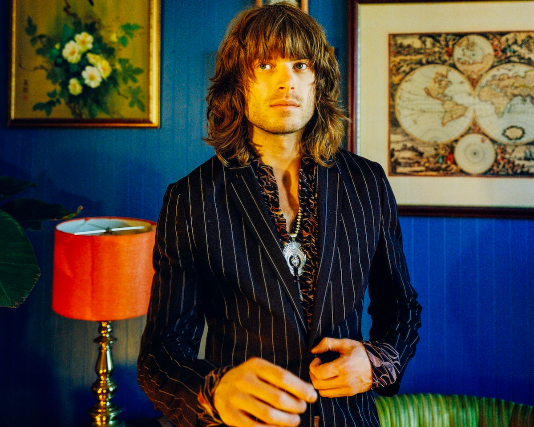
Neal Francis
Neal Francis
Rock
On his new album In Plain Sight, Neal Francis offers up a body of work both strangely enchanted and painfully self-aware, unfolding in songs sparked from Greek myths and frenzied dreams and late-night drives in the depths of summer delirium. True to its charmed complexity, the singer/songwriter/pianist’s second full-length came to life over the course of a tumultuous year spent living in a possibly haunted church in Chicago. The result: a portrait of profound upheaval and weary resilience, presented in a kaleidoscopic sound that’s endlessly absorbing.
The follow-up to Francis’s 2019 debut Changes—a New Orleans-R&B-leaning effort that landed on best-of-the-year lists from the likes of KCRW, KEXP, and The Current, and saw him hailed as “the reincarnation of Allen Toussaint” by BBC Radio 6—In Plain Sight was written and recorded almost entirely at the church, a now-defunct congregation called St. Peter’s UCC. Despite not identifying as religious, Francis took a music-ministry job at the church in 2017 at the suggestion of a friend. After breaking up with his longtime girlfriend while on tour in fall 2019, he returned to his hometown and found himself with no place to stay, then headed to St. Peter’s and asked to move into the parsonage. “I thought I’d only stay a few months but it turned into over a year, and I knew I had to do something to take advantage of this miraculous gift of a situation,” he says.
Mixed by Grammy Award-winner Dave Fridmann (HAIM, Spoon, The Flaming Lips, Tame Impala), In Plain Sight finds Francis again joining forces with Changes producer and analog obsessive Sergio Rios (a guitarist/engineer known for his work with CeeLo Green and Alicia Keys). Like its predecessor, the album spotlights Francis’s refined yet free-spirited performance on piano, an instrument he took up at the age of four. “From a very early age, I was playing late into the night in a very stream-of-consciousness kind of way,” he says, naming everything from ragtime to gospel soul to The Who among his formative influences. With a prodigy-like gift for piano, Francis sat in with a dozen different blues acts in Chicago clubs as a teenager, and helmed a widely beloved instrumental funk band called The Heard before going solo. Along with earning lavish acclaim (including a glowing review from Bob Lefsetz, who declared: “THIS IS THE FUTURE OF THE MUSIC BUSINESS!”), Changes led to such triumphs as performing live on KCRW’s “Morning Becomes Eclectic,” sharing the stage with members of The Meters at the New Orleans Jazz & Heritage Festival, and touring with such acts as Lee Fields & The Expressions and Black Pumas.
Recorded entirely on tape with his bandmates Kellen Boersma (guitar), Mike Starr (bass), and Collin O’Brien (drums), In Plain Sight bears a lush and dreamlike quality, thanks in large part to Francis’s restless experimentation with a stash of analog synths lent by his friends in his early days at the church. “My sleep schedule flipped and I’d stay up all night working on songs in this very feverish way,” he says. “I just needed so badly to get completely lost in something.” In a move partly inspired by Led Zeppelin’s Houses of the Holy, In Plain Sight takes its title from a track Francis ended up scrapping from the album. “It’s a song about my breakup and the circumstances that led to me living in the church, where I’m owning up to all my problems within my relationships and my sobriety,” says Francis, whose first full-length chronicles his struggles with addiction. “It felt like the right title for this record, since so much of it is about coming to the understanding that I continue to suffer because of those problems. It’s about acknowledging that and putting it out in the open in order to mitigate the suffering and try to work on it, instead of trying to hide everything.”
The opulent opening track to In Plain Sight, “Alameda Apartments” makes for a majestic introduction to the album’s unveiling of Francis’s inner demons. “I started writing that song maybe six years ago, before I got sober,” he says. “I was going through another breakup and getting kicked out of my place, and I had a nightmare about moving into an art-deco apartment that was haunted, where the walls were all shifting around.” A prime showcase for Francis’s piano work, “Alameda Apartments” simulates that dream state in its untethered melodies, luminous grooves, and lyrics that drift from despair to detached curiosity (e.g., “It remains to be seen if the ghosts are all right”). “The craziest thing is that I’d never encountered the name ‘Alameda’ in any time in my life prior to that dream,” says Francis. “It’s bizarre that I even remembered it, especially since you don’t dream very often when you’re getting fucked up.”
On “Problems,” In Plain Sight eases into a brighter and breezier mood, with Francis mining inspiration from early-’70s Sly & the Family Stone and the glistening soft rock of Mirage-era Fleetwood Mac. But in a stark contrast to the track’s radiant synth and rapturous harmonies, “Problems” centers on Francis’s exacting introspection. “It’s about being half-in and half-out of a relationship, and how untenable that is,” he says. “I wrote it at a time when I really couldn’t maintain a relationship, because I had too many issues with myself that needed to be addressed.”
Graced with a smoldering slide-guitar solo from the legendary Derek Trucks, “Can’t Stop the Rain” arrives as the first unabashedly hopeful moment on In Plain Sight. “I wrote that with my buddy David Shaw, who came up with the refrain and this idea that even though life’s going to throw all this shit at you, there’s still so many things to be grateful for,” says Francis. Propelled by the track’s cascading piano lines and wildly soaring vocals, that refrain takes on an unlikely anthemic power as Francis shares a bit of gently expressed encouragement: “You can’t stop the rain/It’s always coming down/It’s always gonna fall/But you’re not gonna drown.”
On the guitar-heavy and glorious “Prometheus,” Francis nods to the Greek myth of the Titan god who stole fire from Mount Olympus and gave it to the humans. As punishment, Prometheus spent eternity chained to a rock as an eagle visited each day to peck out his liver—which then grew back overnight, only to be eaten again the following day in a never ending cycle of torment. “That song came from the lowest ebb of quarantine, when Chicago was literally on fire,” Francis says. “It came to me while I was driving around all these abandoned streets in the middle of the night, and turned into a song about facing my problems with addiction and feeling like I’m chained to this set of compulsions.” Threaded with plain spoken confession (“It’s not in my nature to try to do better”), the track features a sprawling synth arrangement informed by the many hours Francis spent playing the St. Peter’s pipe organ. “I call that section of the song ‘The Pope,’” he says. “It’s this grand, powerful entry that’s sort of sinister, and then it just drops away.”
By the end of his surreal and sometimes eerie experience of living at the church—“I’m convinced that the stairway leading to the choir loft where I used to practice is haunted,” he notes—Francis had found his musicality undeniably elevated. “Because I was forced into this almost monastic existence and was alone so much of the time, I could play as often and as long as I wanted,” he says. “I ended up becoming such a better pianist, a better writer, a better reader of music.” Dedicated to a woman named Lil (the de facto leader of the St. Peter’s congregation), In Plain Sight ultimately reveals the possibility of redemption and transformation even as your world falls apart.
“When I started the process of writing these songs, I was so emotionally out-of-sorts and really kind of hopeless that I’d be able to come up with anything,” says Francis. “But then I sat down and started working, and embraced whatever inspiration came my way. Sometimes it felt like beating my head against a wall, but I tried to trust that it would lead somewhere. The whole thing was like a weird dream—this very strange time of terrible, wonderful isolation.”
In Plain Sight has received critical praise from KCRW (“an unapologetically joyful, electric feel”), Rolling Stone (“Neal Francis is making piano rock cool again”), SPIN (“one of the year's best releases”), and more. Both radio singles from the album—“Can’t Stop The Rain” and “Problems”—charted on AAA and Americana radio, with “Can’t Stop The Rain” going as high as #3 on the Americana charts. Francis has toured relentlessly to support the album, playing to thousands with sold out headline dates at legendary venues in Chicago, San Francisco, Nashville, Denver, London, and many more.
In November 2022 Francis released the EP Sentimental Garbage (ATO Records) which includes a number of standout tracks recorded during the original album sessions at St. Peter’s. “Sentimental Garbage was the working title of our last LP,” Francis says, “which includes the track of the same name. We ended up calling that record In Plain Sight while removing the title track from the sequence. I knew this was my last chance to slap ‘Sentimental Garbage’ on a record jacket, the thought of which always brought me great joy. It also works because this record is compiled of bittersweet scraps.”