TICKET SALES TERMINATED
Tickets are currently unavailable on TicketWeb
WWW.SPECTRASONIC.COM
METZ / PREOCCUPATIONS
Sun, 5 Dec, 7:30 PM EST
Doors open
7:00 PM EST
The Bronson
211 Bronson Avenue, Ottawa, ON K1R 6H5
TICKET SALES TERMINATED
Tickets are currently unavailable on TicketWeb
Description
METZ and Preoccupations North American Tour 2021
with special guests FACS
licensed 19+ w/ photo ID - general admission/standing floor
service fees include a $2 facility fee
presented with the support of Ontario Creates
-----
PLEASE NOTE: Following orders from the Government of Ontario, all fans are required to provide proof of full vaccination for entry.
All fans must be fully vaccinated against COVID-19 (at least two weeks after the final dose) and provide proof of vaccination – either a screenshot or receipt of vaccination.
Face masks are required, except when actively eating or drinking.
ENTRY REQUIREMENTS ARE SUBJECT TO CHANGE
-----
limit of six tickets per household/credit card.
lineup, date, venue, times and ticket price subject to change without notice.
all tickets sales are final. no exchanges, upgrades, or refunds.
any tickets purchased by suspected resellers are subject to cancellation.
Event Information
Age Limit
19+
Capacity
600
Post Punk
METZ
METZ
Post Punk
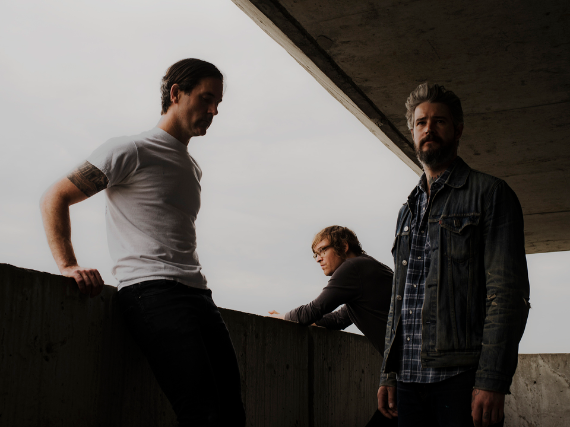
“Change is inevitable if you’re lucky,” says guitarist/vocalist Alex Edkins while talking about Atlas Vending, the fourth full-length album by Toronto’s METZ. “Our goal is to remain in flux, to grow in a natural and gradual way. We’ve always been wary to not overthink or intellectualize the music we love but also not satisfied until we’ve accomplished something that pushes us forward.” The music made by Edkins and his compatriots Hayden Menzies (drums) and Chris Slorach (bass) has always been a little difficult to pin down. Their earliest recordings contained nods to the teeming energy of early ‘90s DIY hardcore, the aggravated angularities of This Heat, and the noisy riffing of AmRep’s quintessential guitar manglers, but there was never a moment where METZ sounded like they were paying tribute to the heroes of their youth. If anything, the sonic trajectory of their albums captured the journey of a band shedding influences and digging deeper into their fundamental core—steady propulsive drums, chest-thumping bass lines, bloody-fingered guitar riffs, the howling angst of our fading innocence. With Atlas Vending, METZ not only continues to push their music into new territories of dynamics, crooked melodies, and sweat-drenched rhythms, they explore the theme of growing up and maturing within a format typically suspended in youth.
Covering seemingly disparate themes such as paternity, crushing social anxiety, addiction, isolation, media-induced paranoia, and the restless urge to leave everything behind, each of Atlas Vending’s ten songs offer a snapshot of today’s modern condition and together form a musical and narrative whole. Album opener “Pulse” is a completely unnerving exercise in reductionist tension, with verses providing little more than a lone discordant chord, a hammering kick drum, and the occasional punctuation of a diving bass note. From there METZ launches into “Blind Youth Industrial Park,” an absolute scorcher of paranoid dissonance and malicious force centered on a chromatic descending riff and a merciless four-to-the-floor drum battery.
The album hits its stride with “No Ceiling”—a minute-and-a-half rager that comes about as close to containing a pop hook as anything METZ has ever written. Though it’s still saturated with in-the-red distortion, this truncated anthem about discovering love and purpose provides the rare counterpoint to the band’s grievous compositions. But there’s no yielding to complacency on Atlas Vending, and the mercurial nature of love and romance is expertly captured in the alternately brutal verses and beguiling choruses of “Hail Taxi.” If METZ’s current mission is to mirror the inevitable struggles of adulthood, they’ve successfully managed to tap into the conflicted relationship between rebellion and revelry with the song’s tactics of offsetting their signature bombast with anthemic melodic resolutions.
The song sequencing follows a cradle-to-grave trajectory, spanning from primitive origins through increasingly nuanced and turbulent peaks and valleys all the way to the climactic closer, “A Boat to Drown In.” The lyrics speak to this arc as well, with the songs addressing life’s struggles all the way through to death, as Edkins snarls “crashed through the pearly gates and opened up my eyes, I can see it now” before the band launches into the album’s cascading outro.
While past METZ albums thrived on an abrasive relentlessness, the trio embarked on Atlas Vending with the goal to make a more patient and honest record—something that invited repeated listens rather than a few exhilarating bludgeonings. It’s as if the band realized they were in it for the long haul, and their music could serve as a constant as they navigated life’s trials and tribulations. The result is a record that sounds massive, articulate, and earnest. Bolstered by the co-production of Ben Greenberg (Uniform) and the engineering and mixing skills of Seth Manchester (Daughters, Lingua Ignota, The Body) at Machines with Magnets in Pawtucket, Rhode Island, METZ deliver the most dynamic, dimensional, and compelling work of their career.
Post-Punk
Preoccupations
Preoccupations
Post-Punk
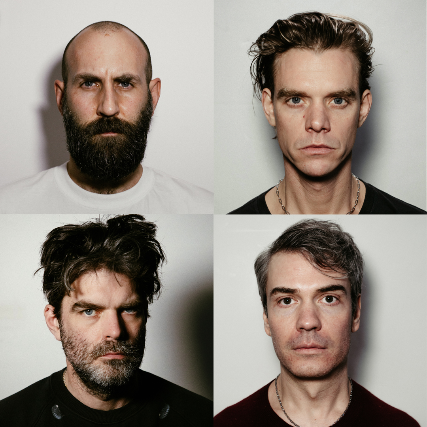
With love and pride, Preoccupations present to you: Ill at Ease, our 5th long play and our first on
the Born Losers record label.
After thousands of hours of scrutinizing over every last detail of this record, I find myself with the
unenviable task of now trying to explain why we made the thing, what the thing is, and who we
are.
We’ve been defining and redefining for a mostly very lucky 13 years. Lucky if not counting all of
the broken bones, broken vehicles, exploding gear, stolen gear, lost baggage, lost friends, lost
hearing, and lost minds. We once thought some of these misfortunes might be exceptional, but
getting older we realize these are all just things that come with the territory, and the rewards we
get for the passing of time. We’ve played 400+ shows across the globe, usually living and working
together in claustrophobic quarters. We’ve aged together, making albums along the way. Some
have even been reasonably acclaimed, others have been merely tolerated.
Which brings us to the now and our album Ill at Ease. It’s hard to say how it fits into our canon, but
it’s definitely drawing from places or genres that we haven’t drawn from in the past. Whether we
want to admit it or not, any music we’re currently listening to is, I’m sure, always informing our
collective subconscious.
The well of dark things to write about seemingly has not dried up, and lyrically, it’s where I still tend
to draw from. Draining all my anxieties into a song is often the only way I can get through a day.
Some songs exist in a world with barren plains of burnt earth, covered in a dust of shame, dread,
death, where all the things I love are things that kill me. Some come from the perspective of
another distant world, looking skyward into a science fiction ocean of space, solitude, slight hope.
Sometimes I’m looking around at the world that we live in now with incredulity, hilariously
dissatisfied with how it’s all turned out, and assuming that it can’t be long before it’s all over. Some
songs are just a reflection of me looking down at my feet while I trudge along wondering what I’m
doing with myself, and if the ground is going to fall out from underneath me at any given moment.
At the end of it all though, this is simply another collection of new songs, and after 13 years, it is
our pleasure and our privilege to still be making new things and to be sharing these new worlds
we’ve created. For now, the ground is still firmly beneath us, but it’s hard to shake the feeling that
it might not be for long, and we will forever be, Ill at Ease.
Avant-Garde Rock
FACS
FACS
Avant-Garde Rock
“Almost Fugazi for Goths”
“Dub Like Jehu”
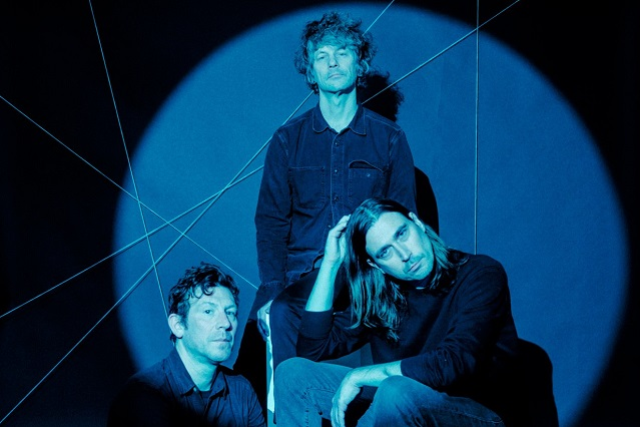
Chicago trio FACS never stop pushing forward; they’ve honed and refined their stark, minimal scrape and clatter for four years and counting, having risen out of the ashes of beloved Chicago band Disappears in 2018 with the bone-rattling intensity of Negative Houses. The trio return in 2021 with Present Tense, their fourth album and perhaps their sharpest statement as a band.
Opener “XOUT” barrels forward like a tank, with Case’s guitar chiming like warning bells, until the climax comes crashing down, glitching out near the close. “Strawberry Cough” comes next, its fusion of corporeal playing and stately, electronic heartbeats punctured by random bursts of noise or backwards masked sounds. “Alone Without”, a track originally recorded for Adult Swim’s 2020 singles series appears next in different form; more menacing and serpentine. Side two opens with “General Public”, taking the loud/quiet dynamic as a jumping off point for the song’s unsettling seasick vibe. ‘How To See In the Dark” offers a brief respite, with its persistent, dark quietude that lingers until the song’s end. “Present Tense”, the album’s title track, offers up its first truly weird moment mid-song when the song changes mood distinctly, and the music drops out save for Case’s guitar and vocals. The album’s final track, the densely packed “Mirrored”, begins with a restrained, post-rock shuffle. The mind-scrambling cacophony that comes next takes its time to roll in, but once it does, it comes in waves, flipping back onto itself multiple times until it’s folded into oblivion.
FACS once again shuttered themselves into Electrical Audio with laude engineer Sanford Parker to lay down the basic tracks and overdubs for Present Tense. This time, the band approached their songwriting from a different angle “Alone Without was the first song we recorded and we really built it in the studio” Case says, “Alianna and I played different instruments, and I think that freedom informed how the other songs developed. All the lyrics were random phrases on a big sheet and were put together as the songs took shape, so I feel like I was collecting these thoughts and trying to figure out how to process them as a big picture vs making complete ideas in individual songs.” Case adds ”…letting the songs go where they wanted, without steering them into what we all think a FACS album should be.” The change is palpable from last year’s claustrophobic and fried Void Moments, but Present Tense is still ALL FACS, albeit draped in a layer of haze. Paranoia in soft focus, perhaps?