TICKET SALES TERMINATED
Tickets are currently unavailable on TicketWeb
Timbre Concerts Presents
Nick Hakim, Arima Ederra
Thu, 1 Oct, 8:00 PM PDT
Doors open
7:00 PM PDT
Hollywood Theatre
3123 W Broadway, Vancouver, BC V6K 2H2
TICKET SALES TERMINATED
Tickets are currently unavailable on TicketWeb
Description
Timbre Concerts presents Nick Hakim With Guest Arima Ederra.
Artist Presale: Wed Jun 10 @ 10am
Public Onsale: Fri Jun 12 @ 10am
For more info on Timbre Concerts and their upcoming concerts visit www.timbreconcerts.com.
Event Information
Age Limit
19+
Refund Policy
All Sales Final. No exchanges or refunds unless the event is cancelled or postponed.
Soul
Nick Hakim
Nick Hakim
Soul
NICK HAKIM - I CAN SEE
Full Biography - Written by Will Schube
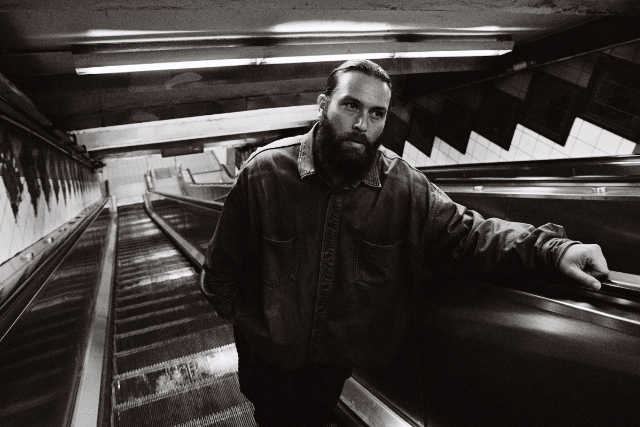
Nick Hakim sits somewhere between an analytical philosopher, mystic poet, and abstract painter. To hear him speak of music is to encounter someone who fully understands its power, who has been moved by its magic and seen its miracles. He’s devoted to music as both an ancient artform and eternal medicine. To hear him play music is to feel these truisms in live time. It’s a spirit that the New York-based songwriter has carried in his music—both as composer and collaborator. From early LPs like 2017’s Green Twins and 2020’s Will This Make Me Good, to his new album, I Can See, Hakim has pursued the truth in every note he’s written, every lyric he’s sung. His truth, though, is more akin to the abstract and intangible than the factual—more Borges than George Washington. It's a cosmic assuredness that manifests throughout I Can See; a belief that the good in the universe is good for a reason.
There’s a song on I Can See that offers insight into the way Hakim wrote, imagined, and recorded the album. “Real Here Now” tells the story of a house. It’s a house not dissimilar from the one Hakim grew up in, but in this domicile, he can interact with family members who have since left this realm. It’s a lo-fi subdued soul-pop jam and features some of Hakim’s most direct lyricism to date: “Haven’t seen you in a minute, I’m good,” he begins. In describing the composition, Hakim refers to the “feeling of a song,” how he wanted “Real Here Now” to exist as a nostalgic reminder of the feeling he has when imagining this space; a place in which those who have left find their voices again. “It’s connected to hearing someone sing songs you used to always hear. Now, you just a have a memory of them.” How sweet it would be to hear them just one more time, Hakim expresses on the song.
Like almost all of I Can See, “Real Here Now” was recorded during the same time as Hakim’s last LP, 2022’s Cometa, but it exists in an entirely different universe than the one in which that project rests. It also, to a certain extent, exists in a different world than some of I Can See. Half of the album was recorded at Sonic Ranch in Texas, and the other half was pieced together in Hakim’s New York apartment. Both sessions took place during the pandemic, and as such, I Can See is a living, breathing reaction to Hakim’s shifting space in the world. It’s an image of an artist coming to terms with their reality, captured in such a way that it reveals new angles with each subsequent viewing—or, in our case, each subsequent listen.
Though these songs are older and they represent an uncertain period in Hakim’s life—when he was finishing up a record deal, forming the world of Cometa, and getting out of an extended relationship—I Can See is defined by its clarity. It’s a sharpness alluded to in the title, like feeling a car rattle as it amplifies potent low end or sitting in a hot tub in zero degree weather. “This record felt very cohesive from the beginning. It felt very precious to me and the tricky thing was figuring out what songs to put on the record,” he explains. He arrived at Sonic Ranch with about 40 demos and began picking out which ideas would make it onto the LP. Some of the songs on the album, like “Real Here Now,” are presented as faithful iterations of those first sketches. It lends the album a tactileness, an emphasis on dynamics that is enhanced by this duality.
Take album closer “Water,” which was recorded at Sonic Ranch. It’s a piano ballad in which the songwriter implores his subject to “keep watering,” alluding to, “Being so grateful for someone that is nurturing.” He sings of “the sweetest love” he’s “ever known,” accented by the ghostly rattling of a barely-there synth. It’s presented without the buzzes and room tone that courses through the home recording songs, and it hits like a punch in the gut.
It’s a song about knowing love exists, and how that feeling is almost as good as the love itself; it’s a comfort in the fact that such pureness can exist in the universe. He is satisfied to capture this as well as he can, knowing that the power of love lies in its ability to elude proper definition. He wrote the song after getting out of that long relationship, and it’s only from this perspective that he could sing of the concept in this way, untethered from experience and free from heartbreak. “The sweetest love one could know might be far away, but it's always there,” he explains.
I Can See is a defining statement from an artist who has yet to put out a record that is anything but. And yet, Nick Hakim’s fourth solo LP is a different experience than his previous efforts. It’s bolder, stronger, more confident. Hakim is more intimately attuned to his vision, and there’s not a note on the album that’s out of place. Nick Hakim might shudder at anyone calling him a healer, but this is certainly music for healing, for taking a breath and facing the world with confidence, lucidity, and joy. “There’s something very gentle and very medicinal about this music. Obviously, we all want our music to be heard by people, but I have a different intention with this record,” he explains, before adding: “The intention is for it to connect with people that need it.”
Hip-Hop/Rap
Arima Ederra
Arima Ederra
Hip-Hop/Rap
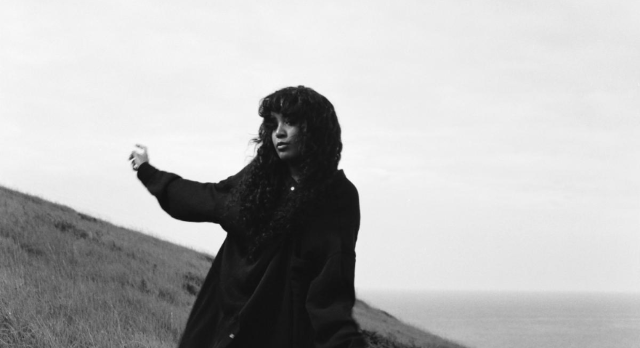
Poetry came first for Arima Ederra, the Los Angeles based singer who’d spent her formative years in Las Vegas. It was there that she first flirted with singing by way of open mics at poetry nights that soon invited her to cover songs from her favorite artists including Bob Marley, Lauryn Hill and Little Dragon. By 2016, she’d moved to Los Angeles and put out Temporary Fixes, an EP of original songs experimenting with her R&B influences on unconventionally structured and textured songs about time and mortality. Her debut LP An Orange Colored Day followed in 2022, a tenderizing meditation on loss and the life that follows heartbreak. Ederra’s honeyed voice singing with childlike curiosity and earnestness gained her fans. The album, largely produced by Ederra and Teo Halm (Rosalía’s “Con Altura”, SZA’s “Open Arms”, Omar Apollo’s “Everygreen”) wove through stories of loss and heartbreak and by the end, she arrives at faith.
In February 2026, the singer-songwriter is set to release her second LP titled A Rush To Nowhere, an invitation over the course of fourteen songs to slow down and experience time without fearing its passing. Ederra wrote ARTN’s songs over the course of two years including on trips away from her LA base recording the album’s songs after she’d returned back home. She reunites with Halm who co-produced much of the album’s fourteen tracks along with Rahm Silverglade. In the project’s first single, “Heard What You Said,” the two create a moody offering moored by a slick synth and a plucky electric guitar. The electric rock architecture suits Ederra’s birdsong vocals just right. Her sound thus far has been less driven by genre as she comfortably travels around soul, R&B, and pop sonic qualities belonging to the Black music tradition to which she belongs and reflective of the singers she admires most including Amel Larrieux and Stevie Wonder. Her musical signature is really an earnestness — her songs stand like one curious question piling on top of the other held by delicious melodies to make songs that swell from reflections to prayers, from diary entries to wide-eyed declarations.
For three months during the writing process, Ederra exclusively listened to Joni Mitchell, Minnie Ripperton, Stevie Wonder and Prince demos. She came out especially inspired by Ripperton’s collaboration with the prolific producer Charles Stepney. The duo encouraged Ederra and Halm, who executive produced the project, to tinker and experiment on ARTN moving from blooming harps on one song to tender piano keys backing a haunting collage of the singer’s voice. Just as captivating is a moment where her whisper grows into a bright belt over a composition of her own soft, humming refrain. Naturally, as Ederra’s songs grow in numbers, they’re also expanding in shape — their depth and structure taking more elaborate forms in service to the feelings she so faithfully metabolizes through her music.
The inquiry grounding Ederra’s new album is the perennial question of time, how it unfurls to spell out our lives, our relationships and their patterns that shape them. “Time was always good to me, don’t know why I was running,” she sings on “In This Life”, A Rush to Nowhere’s second track. Time and memory swirl around the project’s lyrics building a logic Ederra was drawn to about the question time — time as a spiral holding both past, present and future. Temporal delineations collapsed in favor of the way time is felt and experienced. The production services this central inquiry of time. Tracks build and transform with time, at times stopping entirely to take breath before moving along again. Drums beat like a horse’s steady gallop. Vocals overlaid and repeated stretch wide the space of a song.
Visually, Ederra’s representation of her meditations on time take on the qualities of chiaroscuro tableau. In the video for “Heard What You Said,” a long and colorful hallway of memories leads to black and white scenes of abstract allegories. A hand turns a vase holding a lonely flower stem. The singer walks away from a hanging corded telephone. She returns to sing into it: “Did I ever know you? I can’t be sure. I saw a different side, what a difference time shows.”
The rest of ARTN’s visuals follow this tenebristic quality — the colors are moody, almost blue if not black, and the lighting subdued. Clocks appear but they tick and measure time at an anomalous pace. Street scenes speed up and slow down again. Shots are overlapped suggesting some time and space displacement, some experience of a memory superimposed in the present moment. What Ederra accomplishes on A Rush To Nowhere is asking and answering the enduring question of time as the language of our lives and what sweet possibilities appear should we learn to trust time long enough to settle into its vast unknown.