MODO-LIVE x The Plant Presents
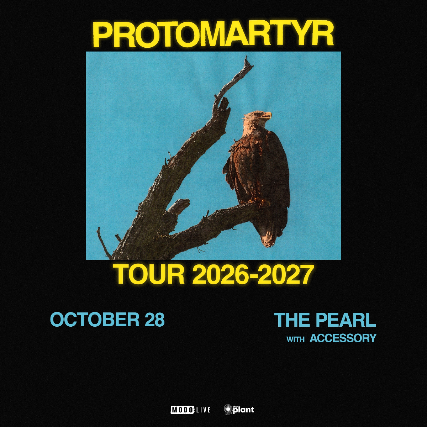
PROTOMARTYR with Accessory
Wed, 28 October
Doors open
7:00 PM PDT
The Pearl
881 Granville Street, Vancouver, BC V6Z 1K7
Description
MODO-LIVE & The Plant presents...
PROTOMARTYR
w/ Accessory
Wednesday, October 28th, 2026
The Pearl
Vancouver, BC
Event Information
Age Limit
19+
Refund Policy
ALL SALES FINAL.
NO REFUNDS/NO EXCHANGES
Post-Punk
Protomartyr
Protomartyr
Post-Punk
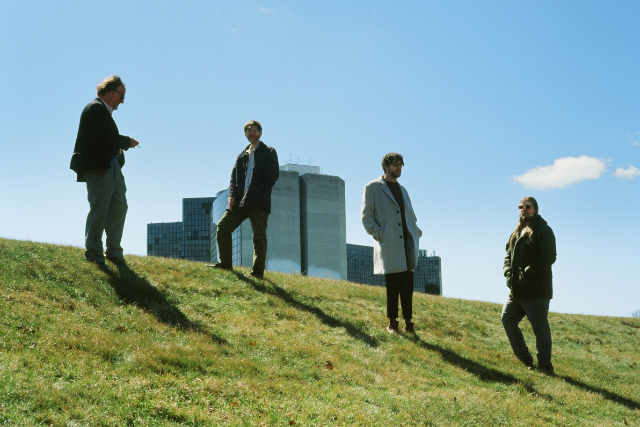
Since their 2012 debut No Passion All Technique, the Detroit post-punk band Protomartyr have mastered the art of evoking place: the grinding Midwest humility of their hometown, as well as the x-rayed elucidation of America that comes with their vantage. Protomartyr—vocalist Joe Casey, guitarist Greg Ahee, drummer Alex Leonard, and bassist Scott Davidson—have become synonymous with caustic, impressionistic assemblages of politics and poetry, the literal and oblique.
The group’s sixth album, recorded at Sonic Ranch in Tornillo, Texas, is called Formal Growth In The Desert. And though frontman Joe Casey did have a humbling experience staring at awe-inspiring Sonoran rock formations and reckoning with his own smallness in the scheme of things – as recounted in the single “Elimination Dances” - the title is not necessarily a nod to the sandy expanses of the southwest. Detroit, too, is like a desert. “The desert is more of a metaphor or symbol,” Casey says, “of emotional deserts, or a place or time that seems to lack life.” The desert brings an existential awareness that is ultimately internal.
The “growth” came from a period of colossal transition for Casey, including the death of his mother. Now 45, Casey had lived in the family home in northwest Detroit all his life until 2021, when a surge of break-ins signaled that it was time to move out. As with all touring artists, the pandemic years also brought on other inner quandaries about the purpose and feasibility of a musician’s life.
But life does go on, and Casey describes the great theme of Formal Growth In The Desert as an embrace and acknowledgment of that fact: a 12-song testament to “getting on with life,” even when it feels impossibly hard. “I was trying to find a way forward after some pretty heavy things, without lyrically resorting to, Oh my god, my life sucks,” Casey says. “I was trying to see what was beyond the trouble.” The titles of the two opening songs—the moody “Make Way” followed by the charging ennui of “For Tomorrow”—complete that thought.
The band’s music—more spacious and dynamic than ever—pulled him up, too. Guitarist Greg Ahee, who co-produced Formal Growth In The Desert alongside Jake Aron (Snail Mail, L’Rain), knew what Casey was going through. Conceptualizing the music, he considered how to make it all “like a narrative film.” Having recently scored a pair of short films, Ahee found himself immersed in the cinematic Spaghetti Western music of Ennio Morricone. “I started to write at home on a piano and on a keyboard and then play along to short films, and watch how you can affect and heighten moods as you play,” Ahee explains.
The filmic sensibility is manifest in Casey’s storytelling, too, whether he’s critiquing ominous techno-capitalism or processing aging, the future, and the possibility of love. Casey calls the centerpiece, “Graft Vs. Host,” written in the immediate wake of his mother’s death, the heaviest song on the record, but it is also among Protomartyr’s most beautiful. It opens with an ominous sprawl before Casey’s sweet, coiling melody buoys the subject matter: “Sadness running through my mind/She wouldn’t want to see me live this way,” he sings, an earnest inquiry into how grief manages to eventually make way for other emotions. “My mom wouldn’t want me to be depressed about her passing for the rest of my life,” Casey explains. “Everybody wants to be happy, but how do you get there? Is it just a surgery that you have, and one day you are allowed? After someone dies, you don’t want to necessarily associate their life with their death.” It was the first Formal Growth In The Desert song that came together for the band in a room—an emblem of “trying to put sadness behind me, to see if I can let love into my life.” It culminates on a pummeling loop, which for Casey felt fitting: “I really like that idea: the band keeps going.”
Alternative
Accessory
Accessory
Alternative
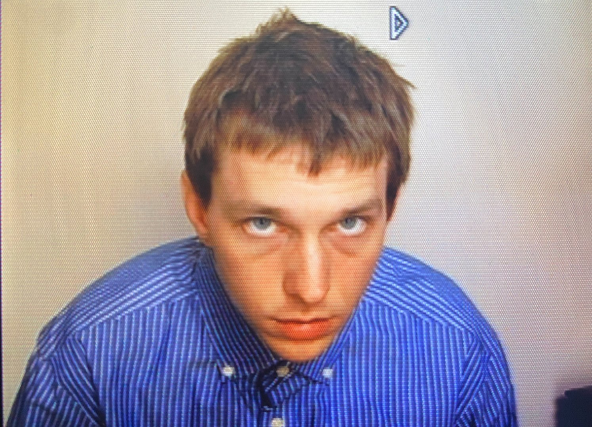
Accessory is the solo project of Jason Balla, a songwriter and multi-disciplinary artist based in Chicago. Their work centers on the conflict between optimism and melancholy, holding the seemingly-infinite weight of both with equal perspective and grace, pointing to their correspondence through curious and complex melodic experiences that mimic the tension of the natural and digital world. Through his work as Accessory, Balla investigates the impact of their integration in how humanity relates to one another, synthesizing intimate acoustic arrangements and human vocals with electronic mutation.
His debut album Dust is where the celestial meets the molecular. Angels, shooting stars, and lightning converse with blood, serotonin and calcium. The duality of Balla’s self-produced work is meticulously crafted through sonic states of intuition and emotion alongside laborious mechanical manipulation. This altering rejects logic for absurdity while the other focuses on the innate nature of pure feeling. In an era of live-streamed pain and overwhelming apathy as the norm, Balla composed these songs to put his world in order, to get to the human heart of it all, processing the decay for himself and for anyone else feeling the ache of pessimism and hopelessness.
Balla has always been a prolific creator and held a distinctly DIY attitude. At an early age he was running sound in downtown clubs and booking shows across a network of Chicago warehouses and basements where he was first exposed to both experimental music and the possibility of alternative lifestyles. In a testament to his assiduous artistic nature, Dust was recorded on equipment mostly built by himself in his home studio.
While the typical studio environment strives toward sound-proofed isolation, Balla embraces the spontaneity of life happening around him. The chirping of birds in the morning, the crashing of glass on garbage day, even the screaming of passerbys from the alley find their way into the recordings behind a vocal take or overdub. The result is an intimate collage of the elemental and accidental with Balla treating the record as a living organism where mistakes are encouraged and experimentation can flourish. While known for his signature guitar and production work in Dehd, Balla proves his scope as an instrumentalist performing everything heard on album with the exception of the viola lent by Whitney Johnson (Matchesse, Winged Wheel).
Much of the record’s foundation was orchestrated on the piano—a gift from his mother after her passing in 2018. Six years later, after nearly non-stop touring, a break-up with a live-in partner and subsequent couch surfing, Balla found enough stability to move it out of storage. Mornings writing on the piano offered a new perspective on composition and a way to commune with his mother’s memory.
Balla devotes significant attention to how we absorb the people closest to us and the relational dents that impact our lives. This informs much of the lyrics throughout Dust: “Whispering dismissive of a feeling not my own” on ‘Angelfire’; “Catch myself trying to prove you wrong / Still catch myself trying to make you proud” on ‘Blood (Magnetic)’; “I cut my hair to prove I was over you” on ‘This Is Not Your Life (static).’ Balla points to missed opportunities, living with your decisions and our capacity for empathy, consolidating a hopelessness that we’re born with and one that develops as we watch the world burn.
There is a sense of release and transcendence through Balla’s work. It’s a lo-fi heliograph with a Cindy Lee-like tenderness, taking notes from the Copenhagen electro-acoustic scene, SML and the experimental jazz world: an act of discovery that finds its tones amidst guitar feedback and soft balladry. On ‘Calcium,’ persistent percussion accompanies Balla’s relentless vocals that recite images of power and tools of violence, contrasting panicked emotional states with dense instrumental beauty. ‘Safeword’ is a reckoning about losing oneself in pursuit, as Balla searches for meaning within and beyond, wrestling with the very notion of love through a sprawling, sumptuous, dream-like immersion of frantic guitars. ‘This Is Not Your Life (Static)’ is a cathartic vehemence, as the organic and electronic swirl with an unguarded and unfiltered vision.
Accessory acts as a sonic companion, exploring the noise and blur of existence and helping to navigate the suffocating nature of potential evil and the budding essence of tender intimacy. Dust serves as the thesis statement, as Balla contends and struggles with the immorality that often overshadows our boundless ability for connection. These two sides of the record tussle, bearing the weight of acknowledging each other. Balla seeks to rationalize the emotional experience, through metamorphic arrangements that take the familiar into a synthesis world.